Wednesday, February 24, 2016

Ralph Waldo Noakes? Why Tim Noakes Changing His Mind About Carbohydrates and Fat Was an Act of Courage

If the Dietary Guidelines for Americans is one of the most embarrassing US publications foisted upon the English speaking global community, Ralph Waldo Emerson's "Self Reliance" may be one of its finest.

One of Emerson's most famous quote from this essay, "A foolish consistency is the hobgoblin of little minds," makes uttering the phrase, "I was wrong" an act of intellectual integrity instead of a shameful admission of fault.
Ralph Waldo Emerson

In the case of Professor Tim Noakes of South Africa, a medical doctor, scientist and marathoner, the heroic turnabout concerned his long-standing recommendation to consume a high-carb low-fat diet to enhance athletic performance.

Noakes was following the conventional dietary "wisdom" of his day, entrusting registered dietitians and nutrition researchers to make scientifically based dietary recommendations. Despite his "healthy" regimen, Noakes found himself overweight and pre-diabetic.

Serendipitously, the A-1 rated researcher read a book by medical doctors Eric Westman, Stephen Phinney and Jeff Volek and another by Gary Taubes that for the first time made him suspect that for carb resistant (CR) people -- possibly half of all adults -- consuming recommended amounts of carbohydrates could cause more harm than good. More shocking, the evidence to support nutritional advice given by most registered dietitians, medical doctors and government guidelines was very shaky.

Noakes' father and uncle suffered from Type 2 Diabetes and the scientist saw himself going down that pot-hole riddled road himself -- despite following his government's high carb low fat dietary guidelines and being an elite athlete.
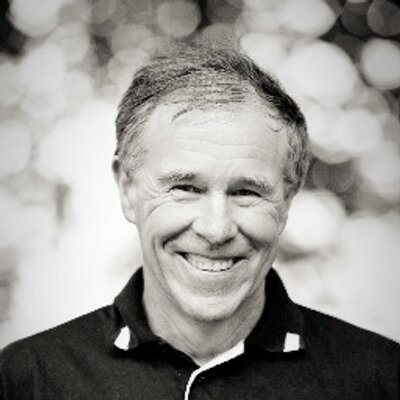
Professor Tim Noakes, MD
The author of Lore of Running, first published in 1985, recommends tearing the chapter on nutrition out of his original book. His more recent books written after his dietary epiphany -- The Real Meal Revolution (for adults) and Raising Superheroes (for children) -- recommend a modified Banting diet (high fat, moderate protein and low carb).

Back in the 90s, I read the work of Dr. John McDougall, who convinced me the "rich Western diet" was the root cause of obesity and chronic disease. For several years I subsisted on a low-fat vegan diet but never realized the myriad health benefits promised by this way of eating; so I returned to a conventional (albeit, also wrong-headed) diet. Yet even as a totally obscure person with no followers other than my husband and children, it was still very difficult for me to acknowledge the extreme dietary regimen my family had been following for two years was not the most healthy way to eat.

So I can only imagine how hard it must have been for Dr. Tim Noakes to tell the world he had made a mistake by recommending a high-carb low-fat diet and that for many, if not most, people the optimal way to eat was virtually the complete opposite. Like Superman's Bizarro world, fat was good; carbs, bad.

Since following with keen interest the "Banting for Babies Trial" -- the Health Care Professions of South Africa (HCPSA) extended hearing on charges that Noakes acted unethically by providing unconventional dietary advice on Twitter to a nursing mother in response to her innocent suspicious query -- I have been struck by how courageous Noakes was to stray from the medical herd and admit he had given bad dietary advice for many years. (For details on this fascinating saga, read these BizNews.com articles.)

Just prior to the landmark Old Mutual Health Convention he hosted with Karen Thomson in South Africa in February of 2015, Noakes released this official statement:
"... “The mainstream dietary advice that we are currently giving to the world has simply not worked. Instead, it is the opinion of the speakers at this summit that this incorrect nutritional advice is the immediate cause of the global obesity and diabetes epidemics. This advice has failed because it completely ignores the history of why and how human nutrition has developed over the past 3 million years.

“More importantly, it refuses to acknowledge the presence of insulin resistance (carbohydrate intolerance) as the single most prevalent biological state in modern humans. Persons with insulin resistance are at increased risk for developing a wide range of chronic medical conditions if they ingest a high carbohydrate diet for any length of time (decades).

"Armed with this knowledge we have two choices. Either we can continue to ignore the evidence presented at this summit, and go on blaming the obese and diabetic for their sloth and gluttony (that is supposedly the sole cause of their obesity and diabetes). Or, if we are ever to reverse this epidemic that has become the greatest modern threat to human health, we need to admit that we have been wrong for the past 40 years, and must now change."
Sadly, too few famous people have the courage of Tim Noakes to change their mind in public and risk being ridiculed by their peers for flip-flopping or flouting convention. Noakes understands that cognitive dissonance makes it uncomfortable for most people to accept conflicting information and have a psychological need to ignore or impugn any data that does not fit their scheme.

Instead, they will continue dispensing the same bad dietary advice that has led to an epidemic of T2D and other metabolic diseases, most of it based on shaky science and funded by Big Food companies who control the message most registered dietitians dish out to a trusting public.
“A foolish consistency is the hobgoblin of little minds, adored by little statesmen and philosophers and divines. With consistency a great soul has simply nothing to do. He may as well concern himself with his shadow on the wall. Speak what you think now in hard words, and to-morrow speak what to-morrow thinks in hard words again, though it contradict every thing you said to-day. — 'Ah, so you shall be sure to be misunderstood.' — Is it so bad, then, to be misunderstood? Pythagoras was misunderstood, and Socrates, and Jesus, and Luther, and Copernicus, and Galileo, and Newton, and every pure and wise spirit that ever took flesh. To be great is to be misunderstood.”
― Ralph Waldo Emerson, Self-Reliance


Sunday, February 7, 2016

Confessions of an Imperfect Low Carber

I was reading an old blog post in Tuit Nutrition yesterday, and was struck by a quote Amy Berger shared from Mark Sisson:

“You should follow the most restrictive diet you can enjoy, not the most restrictive one you can tolerate.” 


As a 50-something, I learned a long time ago the perfect is the enemy of the good. For many years, I didn't want anyone in my house unless it was immaculate. Then I figured out it takes a lot less time to apologize for a messy house than to clean it; so now, as long as my guests have chairs to sit on that are not covered with cat hair, I'm good.

When it comes to diet, I could get equally obsessed with perfection, eating only the cleanest grassiest fed organically raised food from racially mixed family farms within a five mile radius of my house.

I could become so restrictive that one day my inner James Dean would finally rebel and my husband would find me in a carb induced coma outside a pizza joint or doughnut shop.

Fortunately, I am far from perfect.

Since losing 35 pounds two years ago, I have maintained my optimal weight eating foods that have zero or relatively few carbs, such as meat, whole-fat dairy, nuts, avocados and non-starchy vegetables.

Admittedly, I do not always eat foods in their most whole -- or least processed -- form.

When I want my lemon water to be less tart, I use a packaged product called Lakanto, which is a combination of erythritol and luo han guo (monk fruit). For me, this is an acceptable alternative to sugar, Splenda or the myriad other natural and artificial sweeteners that either spike my blood glucose or mess with my microbiome.

I also eat one low-carb Mama Lupe's tortilla every morning as a vehicle for the cheesy and buttery quesadilla I eat for breakfast. Though its macronutrient profile is good, this processed food contains some undesirable ingredients. But I really love starting my day with a quesadilla and think it's better to eat a sub-optimal low-carb tortilla than an inferior grocery store tortilla.

Another confession:

Most days I eat a GNC chocolate chip cookie dough protein bar, which also contains some sketchy ingredients. But eating this bar helps me not crave cookies, brownies, cake, doughnuts, ice cream and the like; so it's a trade off I am willing to make.

And when I eat at restaurants, I can pretty much bet the chicken or cow was not raised in a grassy meadow surrounded by butterflies and rainbows, and my salad greens may have taken a pesticide bath in Mexico. But as a semi-social person, I sometimes dine out with friends and am willing to make some trade offs to partake in this enjoyable ritual.

The bottom line is that most of my diet consists of relatively whole, relatively healthy low-carb high-fat foods. The few imperfect food-like items I allow myself to consume allow me to maintain a healthy diet (by my definition) most of the time.

In other words, I have found the most restrictive diet I can enjoy, not just tolerate; and if I can maintain it for the next few decades, that's pretty good.
 

Sunday, January 17, 2016

'Cooking Light' Is Lying to Its Readers

Cooking Light Continues to Spread Low-Fat High-Carboganda

While web surfing recently I learned that I should be dead or obese since I follow a low-carb high-fat diet.

Happily, as of today, I am neither.

My misinformation came from Cooking Light magazine, which is as relevant to modern day Americans as a telephone book.
 
In response to its readers' question -- "Can I Eat Carbs and Still Lose Weight?" -- Cooking Light contributing editor Carolyn Williams, RD, Ph.D., replied, "Banishing carbs altogether in an effort to lose weight isn't realistic or even desirable."

Williams did not really address the concern because low-carb is not the same as "banishing carbs altogether" (although some people do just that and survive). More commonly, people elect to follow a severely reduced carbohydrate diet, which can be as high as 50 or 60 grams of carbs per day, mostly in the form of vegetables, berries, nuts and dairy. They  not only lose weight, but also reduce or eliminate the need for Big Pharma medications (many of which are advertised in -- yes, you guessed it, Cooking Light!).

Williams also misled readers about the role of carbohydrates in causing obesity, blaming the media for training the public to "associate carbs with weight gain." In her best dietitianspeak, she declared, "Forget what you may have heard, and let me try to clarify how carbohydrates and weight loss are intertwined, how you can lose weight eating them, and how it’s even essential that you eat carbs to burn fat."

Yes, she said essential.

In Williams world, "carbs are designed to be your body’s primary source of energy, and you need an ample amount of carbohydrates each day for your brain and body to function effectively. Only when your body is adequately fueled with carbs can your body also break down fat stores."

She never revealed who exactly "designed" carbs to be the body's primary source of energy since dietary carbohydrates are not only non-essential to human health, they spike insulin and cause the body to store fat.

"If you aren’t consuming enough (carbs)," Williams contended, "you’ll feel the effects—low energy, sluggishness, brain fog, trouble paying attention, and your body will actually go into starvation mode. You’ll start breaking down lean body mass, and your metabolism will slow."

That's exactly what happens to most people who eat the standard American diet (aptly named SAD), of which the majority of calories comes from carbohydrates.

Not surprisingly, Williams fell back on the old energy balance theory popular with the moderation crowd and perpetuated by Coca Cola and other BFFs of the Academy for Nutrition and Dietetics. "Weight loss happens when calories burned daily exceed the calories consumed," she said, "so ultimately weight loss boils down to total calories, not necessarily the specific foods you eat."

Without citing any sources, she stated, "Research even shows that the most effective weight loss occurs when people consume approximately 60% of their calories from carbohydrates" -- as if there were settled science that proves this belief is a fact.

Worse, she backed up her claim by citing the Dietary Guidelines for Americans, a highly controversial set of recommendations that advises humans to consume 45-65% of their calories from carbs.

To her credit, Williams conceded that the quality of carbohydrates counts; so broccoli is better than Cheetos. But her definition of quality is wanting. Williams considers low-fat dairy to be a nutritional good guy, even though it is unsatiating, relatively high in sugar and does not contain enough fat to absorb the re-added vitamins that are lost when dairy processors turn whole milk into expensive white water.

Cooking Light can do much better by its readers and acknowledge, as have many experts in the field who once advocated for low- fat high-carb diets, that the whole concept was a big fail based on bad science.

Saturday, January 9, 2016

Dietary Guidelines in a Post Truth Society

One of my favorite morning radio guys used the term post truth society recently concerning politicians who repeat fictitious statements until they're accepted as dogma. Thus, Muslims in New Jersey danced on rooftops, according to Donald Trump, despite the fact not one media source has footage of this happening.

And it's why the federal government and registered dietitians advise Americans to limit saturated fat to no more than 10% of one's daily calories, despite the fact there is no settled science to support this.

Because if you repeat something enough times, it becomes true. Even when it's not true.

I wish it didn't matter what the feds and dietitians had to say about healthy diets, but their opinions weigh heavily on our nation's health in myriad ways. The school lunch program, nutrition facts on packaged foods and even physician's medical advice are heavily controlled by what a handful of "experts" deem nutritious every five years.

And because medical professionals are kept hostage by licensing agencies, few dare to challenge the word of dietitians who are typically marionettes of the corporations who indirectly pay their mortgages. Thus, the task of declaring, "The emperor has no clothes," has been largely left to journalists like Gary Taubes and Nina Teicholz who, at the risk of mixing kiddie lit metaphors here, persist in exposing the Wizard of Oz as just another Joe Schmo from Kansas.

Even though Americans have gotten sicker and fatter since the first iteration of the Dietary Guidelines for Americans in 1980, the new guidelines released this week are very similar to those released five years ago and five years before that. This, despite many studies clearly showing low-carb high-fat diets have the potential to reverse many chronic illnesses caused by the low-fat high-carbohydrate diets the Dietary Guidelines endorse.

I follow quite a few medical experts who favor low-carb high-fat diets and am heartened by the groundswell movement by people with bona fide credentials to change the status quo. One of the most hopeful signs is an organization started last year called the Nutrition Coalition whose aim is "to strengthen national nutrition policy so that it is founded upon a comprehensive body of conclusive science, and where that science is absent, to encourage additional research."

In other words, to stop telling people how to eat based on sketchy, often biased, research.

One of the leaders of this truth-based nutrition movement, Nina Teicholz (New York Times best selling author of The Big Fat Surprise), is a driving force behind the Nutrition Coalition as is another of my #LCHF heroines, Dr. Sarah Hallberg, who has embarked on a ground breaking research project on reversing type 2 diabetes with her Arnett Health Medical Weight Loss Program patients in Lafayette, Indiana.

Meanwhile, I cling to a shred of hope for the future as I meet more and more ordinary Americans who are discovering via personal bio-hacking that conventional dietary foolishness is not only wrong, it's potentially dangerous. An acquaintance with type 2 diabetes recently shared, for instance, that she follows a low-carb high-fat diet because she discovered that following the American Diabetes Association diet made her sicker and more dependent on diabetes medication.

Friday, January 1, 2016

Why You Should Consider Switching to a Low-Carb High-Fat Diet in 2016

As a foodie who has spent more than five decades on this planet, I have followed almost every diet known to humans shy of eating monk fish and bananas exclusively (no, that is not an actual diet, but it could be one day). From a health, weight control and compliance perspective, my favorite diet so far has been low-carb high-fat. I could follow this eating plan for the rest of my life without feeling the least bit deprived.

The most amusing and telling RD response
to why Dietary Guidelines don't work
is that people don't follow them.
And though we all have our own metabolic idiosyncrasies and unique microbiomes, I suspect many people who love food as much as I do should also part ways with such failed diet concepts as "moderation" and high-carb low-fat recommended by both the USDA, Coca Cola and Big Food.

If you are one of the rare people who can subsist on donuts, Marlboros and Mountain Dew and still live to 100, please ignore what follows. Most people, however, need to make conscious food choices to look and feel good, choices which can be hard to make when the government-healthcare-media complex continues to push yesterday's discredited dietary advice as if it were handed down by God on stone tablets.

The historic rationale behind our dietary misguidelines is very complex, but you can find a most entertaining detailed recap here. The Readers Digest version is we have rabbits, lazy researchers and failed presidential candidate George McGovern to blame.

I happened upon low-carb high-fat eating by accident, basically after following the Medifast Take Shape for Life program and dropping 35 pounds with minimal effort. I no longer eat any Medifast foods; nor do I endorse its low-fat manufactured food approach; but what that diet did teach me was I did not need to eat pasta, potatoes and bread to feel satisfied.

In fact, by eliminating what I like to call "the whites," I could eat more of the foods I liked better, like avocados, steak, bacon, nuts, seeds, butter, and whole-fat cheese (along with vegetables and low-sugar fruits like blueberries) -- and not feel hungry between meals.

Satiety is the key to being compliant on any diet since if you don't feel satisfied you will be jonesing to eat foods that are not on plan. That is why people cheat on their diets and then binge on more forbidden foods because they feel guilty or bad about themselves.

Since following a low-carb high-fat way of eating, I don't ride that merry-go-round any more.

What's funny is that even with all the publicity in recent years suggesting studies on saturated fat were bogus and carbohydrates are the real culprits behind our nation's chronic diseases, such as Type 2 Diabetes (no longer called Adult Onset Diabetes because children are now being diagnosed with it), many people have not yet gotten the memo. This, despite the documented success doctors like Sarah Hallberg, Andreas Eenfeldt, Rangan Chatterjee, Tim Noakes and others have had with patients following high-fat low-carb diets.

Not to mention myth shattering books like Gary Taubes' Good Calories, Bad Calories and Nina Teicholz's The Big Fat Surprise.

Sometime this month, the federal government is going to issue another set of U.S.D.A. Dietary Guidelines that will likely continue to make Americans fatter and sicker. Fortunately, there are many books and articles now available that refute the faulty research on which the guidelines are based and demonstrate how and why low-carb high-fat diets are healthier for most people.

So before drinking that Diet Coke and driving to the gym to work off the egg white omelet you had for breakfast, resolve on this first day of 2016 to do your own research to determine which diet is healthiest for you.

You may never have to subject yourself to a sad low-fat dinner of poached chicken breast, quinoa and steamed broccoli again.

Thursday, December 24, 2015

Chipotle E. coli Conspiracy Theory: Is Big Chemical Retaliating Against Burrito Bowl Chain?

Could corporate saboteurs be planting E. coli in your Sofritas burrito?

I do not believe the moon landing was a hoax filmed in a TV studio or that Pres. Barack Obama is a Muslim Manchurian candidate. But that doesn't mean I automatically reject all conspiracy theories, including the latest buzz about Chipotle Mexican Grill being targeted by biochemical companies like Monsanto for its advocacy of local, organic and non-GMO ingredients.

In fact, I had this suspicion several days before I saw the first articles suggesting this possibility because I know how Big Food/Soda/Agriculture/Chemical operate. In short, they accuse anyone who disagrees with them of being anti-science fearmongers while foisting industry-sponsored unscientific research on the public as fact and creating fear around not consuming their highly processed products and byproducts.
Chubby Chipotle website was
another Big Food stealth campaign
to discredit burrito bowl chain

In the case of Chipotle, the fast food chain that boasts about its use of natural ingredients, the likelihood Big Ag and Big Chemical would take the bashing of their products sitting down were slim.

My suspicion about a possible conspiracy grew when I read an article last night in Natural News about some of the strains of E. coli found in Chipotle being genetically rare, a fact (i.e., not opinion) that was corroborated by such government sources as the FDA and CDC websites.

Reports of at least two disparate E. coli contaminations and several Norovirus incidents occurring so closely together -- a total of six separate events since July -- could be just a random coincidence. Or not. It could also be an organized attempt by adversaries of the second fastest growing fast food chain in the U.S. to discredit the company's highly publicized stance against genetically modified and chemicalized ingredients.

from Natural News
It didn't take long before the Internets were awash with "I told you so's" about needing to chemically wash and genetically alter foods to protect against foodborne illnesses. What may have looked like a fortuitous opportunity for the artificial food industry to blow its own horn could have been part of the overall campaign to first ruin the reputation of Chipotle and then convince the public that local, organic and non-GMO foods are really bad for you.

Was Chipotle too busy avoiding the fake dangers of GMOs to focus on actual food safety?
-- headline from Vox

When Eating Clean Is Dirty: Chipotle, ‘Fresh’ Offerings and Food Safety

-- headline from US News


It would not be the first time the processed food industry has banded together to chip away at Chipotle's growing popularity. The website Chubby Chipotle is backed by Big Food money hiding behind an innocuous sounding front group called The Center for Consumer Freedom.

Funny, but last time I checked, no one was kidnapping me in their Prius, driving me to Chipotle and forcing me to eat its food.

When I tweeted a link to the Chipotle conspiracy theory article from Natural News,  I should have expected a backlash based on the source. The website is a major target of so-called pro-science people who consider the site's founder Mike Adams of being an anti-science fearmonger.

Not surprisingly, I received such responses as
(At least @DebunkedByHaiku displayed some wit and did not rely on a Donald Trumpian style attack.)

Bottom line:

As nutty as most conspiracy theories sound, it is naive to believe companies never practice criminal behavior to further their aims. Think Volkswagen and Enron as just two top-of-mind examples.

With GMO labeling a hot topic right now, it is neither lunacy nor irrationality to posit that shady forces could be behind Chipotle's recent spate of bad publicity.

Saturday, December 12, 2015

Shills Vs.Fearmongers in Fierce Food War

Battle over public opinion pits Big Food puppets against populist health advocates

I had no idea I was a fearmonger until I became ensnared in a bizarre Twitter thread with some rabid registered dietitians.

This was my first virtual excursion into the Food War, a global contest in which Big Food and its foot soldiers fiercely battle anyone who disputes their dietary dogma. Both sides claim to wear the mantel of science, like two football teams each convinced they are favored by a Higher Power.

What surprised me the most about the Food War was how many so-called health professionals still cling tightly to outdated, poorly designed studies to defend their dietary advice. I found myself in a minefield of research propaganda and pseudoscience funded by corporations increasingly threatened by mounting evidence that sugar- and highly processed carbohydrate-filled products are linked to obesity, Type 2 diabetes and other chronic health conditions.

It all  began when I questioned the credibility of registered dietitians while following the Tim Noakes hearing witch hunt in South Africa. This led to a corporate supermarket RD named Leah McGrath sending me an unsolicited list of tweeters who she claimed had "integrity" -- although they all support serving high-sugar flavored skimmed milk to school children. I tweeted something about some RDs being mouthpieces for Big Food and received an excited response back from McGrath asking me if mouthpiece meant the same thing as shill. It turned out she and her RD pals take perverse pride in being called a shill and highlight the occasion with the hashtag #shilltastic every time they are labeled such.

Yes, #shilltastic is a thing.

Then McGrath thought I'd be interested in reading an article tweeted by a dietetic intern named David Weinman who proclaims himself to be pro-science. The piece was typical Salon click bait about so-called sancti-mommies, a new breed of millennial females who pass harsh judgement on the health and safety of the foods other mothers feed their children. Why I'd be interested in this article escaped me since the Salon piece focused mainly on anti-vaccine and GMO politics, topics on which I had not even opined. Weinman asked me in a tweet if I was implying scientists would commit fraud and jeopardize their careers to shill for Big Food -- as if that possibility were as absurd as ponies sprouting pig tails.

For the first time I had an upfront and personal view on how Big Food's army of registered dietitians and wannabes co-opt the word "science" to discredit anyone who disagrees with their perspective.

Suddenly all of the news stories I'd been following made more sense:

** Professional dietitians funded by Kellogg's and other Big Food companies persecuting Dr. Tim Noakes and dietitian Jennifer Elliott for not accepting their dietary dogma as fact. 

** "Scientists" ganging up against journalist and "Big Fat Surprise" author Nina Teicholz to discredit her editorial in the BMJ on the sketchy methodology of the USDA Dietary Guidelines Advisory Committee.

** The feds wiping egg off their face after reversing themselves on avoiding eating egg yolks, shellfish and other foods that contain dietary cholesterol, a warning which turned out to have scant scientific merit.

** Corporations like Monsanto and Coca Cola bribing academics to perform research that will make their products seem harmless and labeling conflicting research findings as pseudoscience.

(The Coca Cola story reported by New York Times investigative journalist Anahad O'Connor outed the company for bribing researchers to convince the public that sugary drinks can be part of a healthy diet as long as you exercise. Coca Cola VP Rhona Applebaum resigned over the scandal after emails published by the Associated Press revealed the academics were paid puppets and the bogus research network -- Global Energy Balance Network -- quickly disbanded citing "resources limitations.")

Though I am neither a scientist nor health care professional, I have a huge stake in who wins the Food War. I am Jane Q. Public, a surrogate for those whose hearts and minds both sides are attempting to control. In a few months, I will have a new grandchild who will be fed biased nutritional information at school and supplied with milk that contains more added sugar than should be consumed in a whole day.

My meandering journey into the low-carb high-fat way of eating has serendipitously led me to the sidelines of the Food War, and I think I may just stick around for a spell.